

 Explainer
What Is a Bill of Lading and Who Signs It?
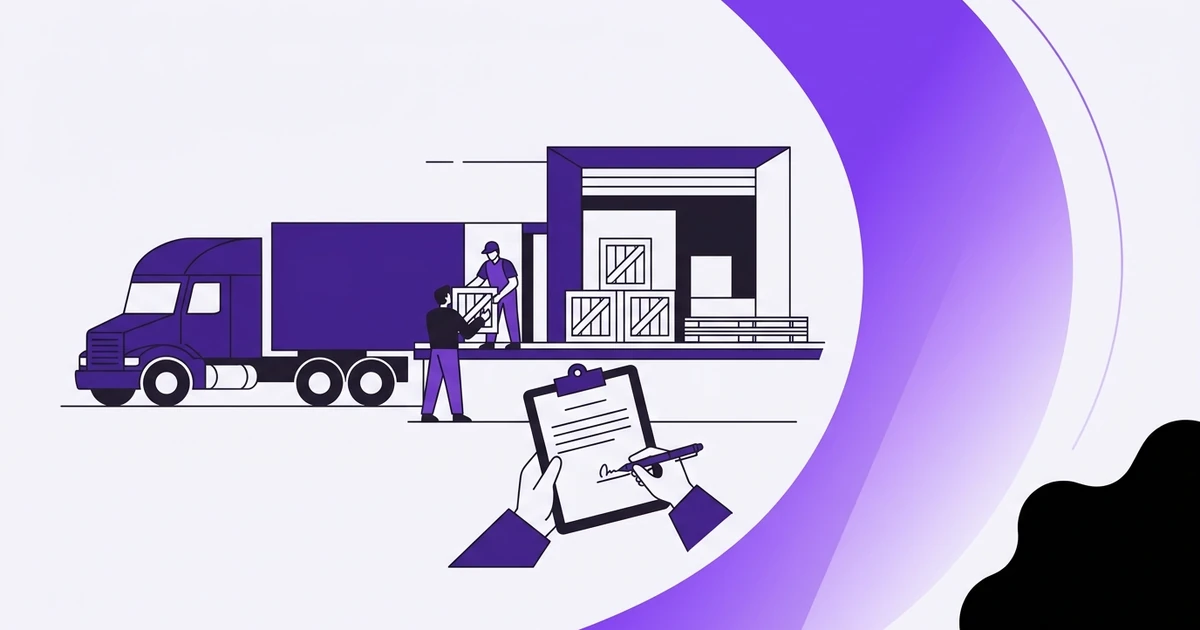
A bill of lading is a document that moves with freight, acting as a carrier receipt, contract of carriage, and sometimes document of title. The driver signs it on pickup from the shipper, and the consignee signs it again upon delivery to confirm condition and note exceptions.
Key takeaways
- A bill of lading acts simultaneously as a receipt, a carriage contract, and potentially a document of title.
- The driver signs at origin, while the consignee signs at destination to note any damage or shortages.
- Signing a clean delivery receipt makes pursuing subsequent damage claims substantially harder.
- Discrepancies frequently occur when physical dock paperwork is manually retyped into systems early in the morning.
What is a bill of lading and what purpose does it serve?
A bill of lading is the document that actually moves with the freight, and most disputes about a shipment turn out to be disputes about what it says. Legally and operationally, it serves three things at once: a receipt that the carrier took the goods, a contract of carriage, and in its negotiable form a document of title. Because the physical paperwork accompanies the cargo, its exact contents dictate operational responsibilities throughout transit. Shipper personnel prepare this paperwork before releasing items, establishing the baseline against which carrier custody and final condition are evaluated across destinations.
Who signs a bill of lading during transit?
The shipper prepares the paperwork, the driver signs on pickup, and the consignee signs again on delivery. That second signature matters most when something is damaged, because it is where exceptions get written down. A consignee who signs clean and finds damage later has a much harder claim. The carrier driver’s endorsement verifies physical receipt of specified cargo from the shipper. At the destination dock, the consignee inspects incoming goods and records any evident loss before adding their signature, establishing whether goods arrived intact or compromised.
How do straight bills, order bills, and sea waybills differ?
A straight bill names a consignee and cannot be traded. An order bill can be endorsed and passed on, which is why banks care about them in letters of credit. A sea waybill does the first two jobs but not the third, and that is the point of it: nobody has to wait for paper to arrive before the cargo can be released. Negotiable order bills provide controlled security in trade transactions, whereas non-negotiable instruments prioritize expedited handling so ocean carriers can discharge freight quickly upon arrival.
Where do common bill of lading errors originate?
The practical failure is almost never the legal form. It is that the paper copy and the system copy disagree, because somebody retyped one into the other at a dock at six in the morning. According to Talking Logistics, that hand-off at the dock is where most document trouble begins. Manual transcription under rushed warehouse conditions introduces mismatches between physical documents and enterprise records, precipitating the carrier disputes that arise downstream.
FAQ
Who prepares the original bill of lading?
The shipper prepares it before handing cargo over to the carrier.
Why is the delivery signature critical for damage claims?
The consignee signs on delivery where exceptions get written down; signing clean makes later claims much harder.
Why do banks care about order bills in letters of credit?
An order bill can be endorsed and passed on as a document of title.